Mineral Deposits on Faucets
Calcium and magnesium can leave chalky deposits around faucets, showerheads and other plumbing fixtures.
Hard water can leave mineral deposits on faucets, showerheads, dishes and plumbing fixtures. A properly selected water softener can help reduce these problems and improve everyday water use throughout your home.
Ashburn Plumbing Repair helps homeowners understand water softener installation and replacement options based on their household water usage and plumbing requirements.
Request Plumbing Service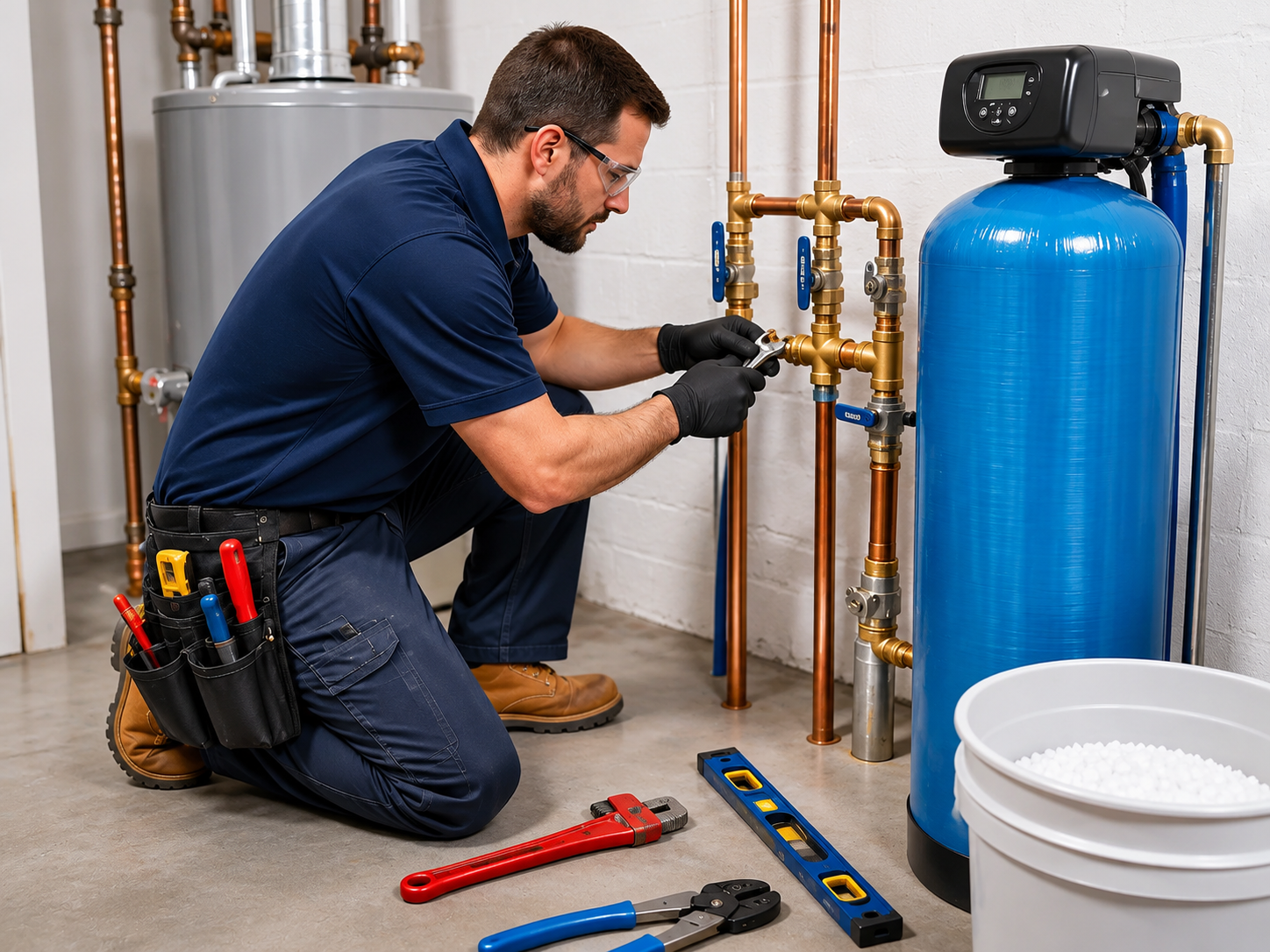
Hard water contains dissolved minerals, primarily calcium and magnesium. Although these minerals are naturally present in water, higher concentrations can contribute to mineral scale around faucets, showerheads, pipes and household appliances.
A water softener is designed to reduce water hardness through an ion-exchange process. In a typical salt-based system, hardness minerals are exchanged for sodium or potassium ions. This helps reduce mineral deposits associated with hard water.
Professional water softener installation involves assessing your household water requirements, checking the available plumbing connections, selecting a suitable system and configuring the equipment according to its specifications. The right setup depends on your home's water hardness, daily consumption and plumbing arrangement.
Hard water can affect several areas of your home. Recognizing common warning signs can help you decide whether water testing and a softening system are worth considering.
Excess hardness minerals can create cleaning challenges and contribute to scale accumulation in residential plumbing.
Calcium and magnesium can leave chalky deposits around faucets, showerheads and other plumbing fixtures.
Hard water can leave cloudy films and mineral spots on glassware, dishes and kitchen surfaces.
Hardness minerals may accumulate inside water heaters and contribute to scale-related maintenance concerns.
Hard water can affect soap performance, making bathing, laundry and household cleaning more difficult.
Mineral scale can build up in water-using appliances, potentially increasing cleaning and maintenance needs.
A water hardness test can help determine whether your household may benefit from water softening.
Correct equipment selection and installation help ensure that your water treatment system is configured for your home.
Understanding water hardness helps determine whether a softening system is appropriate.
System capacity can be selected according to household size and expected water consumption.
Correct connections, bypass arrangements and drainage setup are important installation details.
Proper setup helps the equipment operate according to its manufacturer specifications.
Initial checks help verify plumbing connections, equipment settings and system operation.
Understand salt replenishment, cleaning, regeneration and routine system maintenance.
A straightforward approach from the initial consultation to the final system checks.
Discuss your hard water concerns, household usage and existing plumbing arrangement.
Review water hardness, installation space, plumbing connections and equipment requirements.
Install and connect the selected water softener according to equipment specifications.
Review the initial system operation and explain basic settings and ongoing maintenance.
Choosing a water softener is about more than selecting equipment. Your plumbing layout, water usage and maintenance requirements should all be considered.
Looking for water softener installation in Ashburn or nearby Northern Virginia communities? Contact our team to discuss your location and service needs.
Answers to common questions about hard water treatment, water softener installation and replacement in Ashburn, VA.
A water softener reduces hardness minerals, primarily calcium and magnesium, through an ion-exchange process. This helps limit mineral scale and can improve soap lathering and cleaning performance.
Common signs include white deposits around faucets, spots on dishes, soap that does not lather easily and mineral buildup around plumbing fixtures. A water hardness test can help confirm the issue.
Installation costs depend on the equipment selected, system capacity, plumbing configuration, drainage access and installation requirements. An assessment can help determine the expected project scope.
Installation time varies depending on the system, existing plumbing, accessibility and any additional modifications required. The expected schedule can be discussed after assessing your property.
A whole-house water softener is commonly installed near the main water supply entry point. This allows treated water to reach multiple fixtures throughout the home. The exact position depends on plumbing access.
Yes. An older or malfunctioning unit can be assessed for replacement. The new system should match your household water hardness, consumption and plumbing configuration.
No. A conventional water softener primarily reduces hardness minerals. It is not designed to remove every chemical, bacteria or contaminant. Additional water treatment may be necessary depending on testing.
Most salt-based systems require periodic salt replenishment and occasional inspection or cleaning. Maintenance frequency depends on water usage, hardness levels and manufacturer recommendations.
A water softener reduces hardness minerals, while a water filter targets specific substances depending on its filtration technology. Some homes may benefit from both systems.
Ashburn Plumbing Repair provides residential plumbing services in Ashburn, VA. Contact our team to discuss your water softener installation or replacement needs and confirm service availability.
Whether you are considering a new whole-house water softener or replacing an existing unit, contact Ashburn Plumbing Repair to discuss your home's plumbing and water treatment needs.
Contact Ashburn Plumbing Repair