Tell Us About Your Hot Water Needs
A quick conversation covers your home's size, number of bathrooms, current water heater, fuel type, and daily hot water usage. This information helps identify your household's tankless water heating requirements.
Tired of running out of hot water halfway through a shower or waiting for your water heater to recover? A tankless water heater heats water on demand instead of storing it in a traditional tank. Explore tankless water heater installation options in Ashburn, Virginia, and find a system suited to your household's hot water needs.
Call Now: 0000
Tankless water heater installation in Ashburn, VA provides an alternative to traditional storage tank systems by heating water on demand whenever a hot water fixture is used. Unlike conventional water heaters that store a limited amount of heated water, tankless systems use heating elements or gas burners to warm water as it flows through the unit. Choosing the right system involves considering household hot water demand, the number of bathrooms, simultaneous fixture usage, available fuel sources, and installation requirements. Depending on the existing plumbing and utility connections, installation may involve water line modifications, electrical or gas connections, proper venting, and system sizing. Homeowners in Ashburn Village, Broadlands, Brambleton, and nearby communities can explore tankless water heater options suited to their property's needs. Understanding the installation requirements and available system types helps property owners make informed decisions about their long-term hot water needs.
Your hot water runs out after a few minutes of showering, especially when multiple household members use water at the same time.
Your traditional storage tank is aging, showing signs of corrosion, or producing inconsistent hot water.
You notice water pooling around the base of your existing water heater, which may indicate a leak or deteriorating tank.
Your household energy bills keep increasing, and you want to explore a more energy-efficient on-demand water heating system.
Your basement or utility room feels cramped because a large traditional water heater takes up valuable floor space.
You have needed repeated water heater repairs and want to compare the long-term benefits of installing a new tankless system.
Four straightforward steps to help you upgrade your home's hot water system in Ashburn, VA.
A quick conversation covers your home's size, number of bathrooms, current water heater, fuel type, and daily hot water usage. This information helps identify your household's tankless water heating requirements.
The plumber reviews your existing water supply, gas or electrical connections, venting options, and available installation space. These details help determine suitable tankless water heater models for your property.
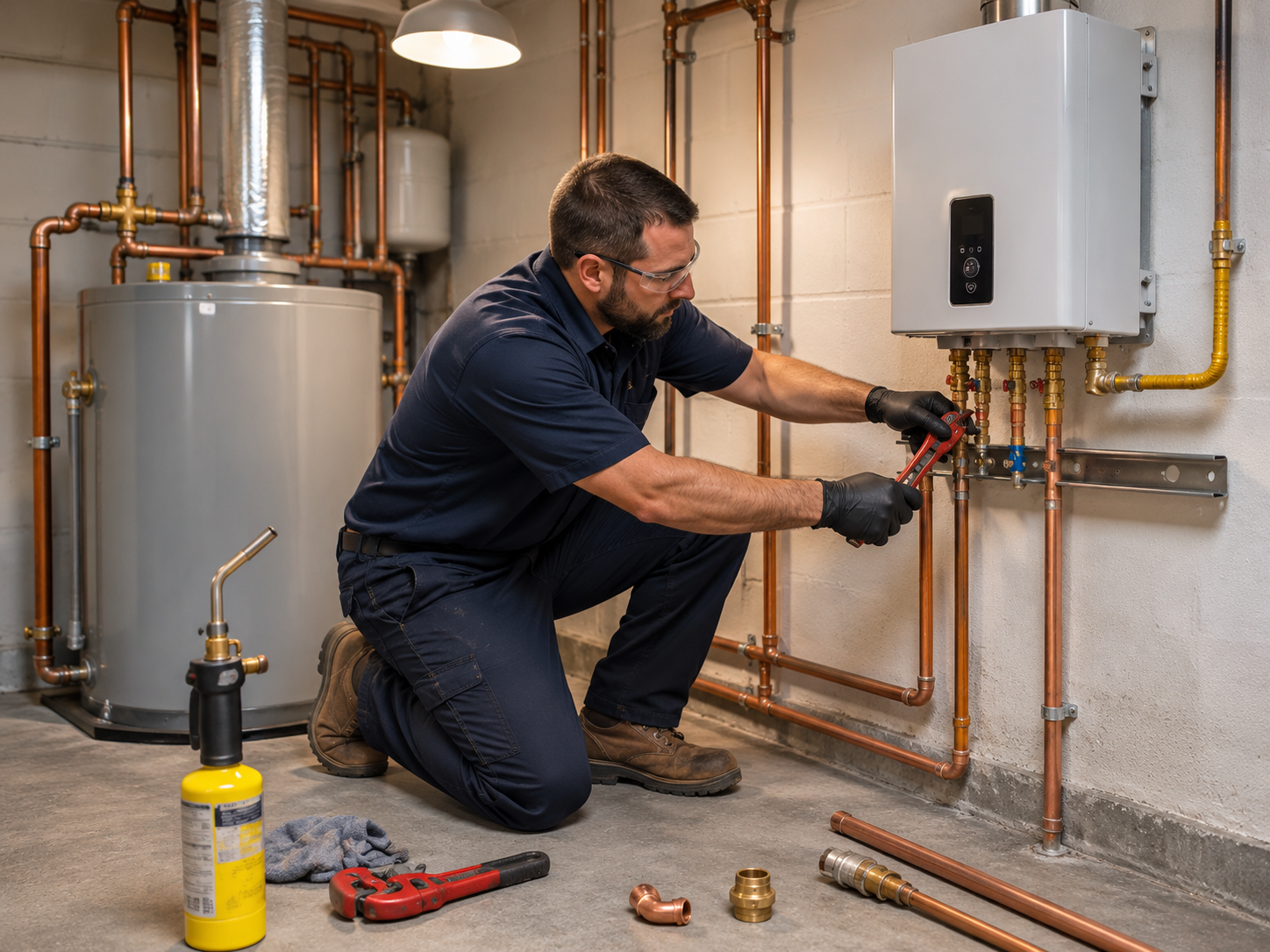
The existing equipment is disconnected as appropriate, and the new tankless water heater is mounted and connected. Required plumbing, gas or electrical connections, and venting are addressed according to the installation requirements.
After installation, the system is checked for proper operation, connection leaks, and temperature settings. You'll receive information about your new tankless water heater and practical maintenance considerations.
Choosing and installing a tankless water heater involves more than selecting a new appliance. Your home's hot water demand, existing plumbing, fuel supply, venting, and available installation space all influence the right solution. Explore tankless water heater installation services and related options for residential properties throughout Ashburn, Virginia.
Finding a suitable water heating system based on household demand, available utilities, and property requirements.
Explore on-demand water heating systems for houses, townhomes, and residential properties in Ashburn. Installation planning considers household size, plumbing connections, available utilities, and daily hot water requirements.
Consider gas-powered tankless water heaters for properties with suitable natural gas or propane connections. Gas supply capacity, venting, combustion air, and manufacturer requirements are important parts of installation planning.
Explore electric tankless water heating options for homes where the electrical supply can support the required demand. Installation considerations include available circuit capacity, voltage, amperage, and the home's electrical panel.
Selecting an appropriately sized tankless unit requires evaluating simultaneous hot water usage, incoming water temperature, required flow rate, and the number of bathrooms and fixtures in your Ashburn home.
Replace an existing storage tank water heater with an appropriately selected tankless system. The conversion may require changes to water connections, gas or electrical supply, mounting arrangements, and venting.
Professional installation considerations for connecting, mounting, and configuring your new on-demand water heating system.
Plan a new tankless water heater installation based on the property's plumbing layout, equipment specifications, mounting location, and available utility connections.
Review hot and cold water supply connections, isolation valves, pipe sizing, and required fittings. Proper plumbing connections help support the tankless unit's specified operating requirements.
Gas tankless systems require appropriate exhaust venting and combustion air arrangements. Vent materials, routing, clearances, and termination locations must follow the manufacturer's specifications and applicable codes.
Some tankless installations require changes to existing gas piping, electrical circuits, or utility connections. The required upgrades depend on the selected equipment and the property's existing infrastructure.
Configure the water heater according to manufacturer instructions and household requirements. Temperature settings and operating controls are reviewed as part of the installation and commissioning process.
Supporting proper system operation through installation checks, maintenance planning, and related water heating solutions.
Check the installed equipment, accessible connections, water flow, and operating temperature. Appropriate commissioning checks help identify installation issues before the system is put into regular use.
Mineral deposits can accumulate inside tankless heat exchangers, particularly in areas with hard water. Manufacturer-recommended flushing and descaling can help maintain heat transfer and normal system operation.
Review accessible water connections, venting arrangements, filters, and operating indicators. Inspection can help identify maintenance concerns or conditions that may require further attention.
When an existing tankless unit reaches the end of its useful service life or develops significant problems, replacement planning considers the existing installation, household demand, and compatible equipment options.
Understand recommended maintenance intervals, filter care, descaling requirements, and operating considerations for your installed tankless water heater. Maintenance needs vary by model and water conditions.
Not sure which tankless water heater is right for your home? The right installation depends on your household's hot water demand, existing utilities, equipment specifications, and property layout. Call 0000 to discuss tankless water heater installation options in Ashburn, VA.
Tankless Water Heater Installation in Ashburn, VA • Residential Plumbing Solutions • Call to Discuss Your Installation
Don't see your question? Call 0000 and we'll help you understand your options.
The appropriate size depends on your household's peak hot water demand, the number of bathrooms, simultaneous fixture usage, and incoming water temperature. A properly sized system should provide the flow rate your household needs without being unnecessarily oversized.
Installation time depends on the existing water heater, plumbing connections, fuel supply, electrical requirements, venting, and accessibility. A straightforward replacement may take less time than a conversion requiring substantial utility or plumbing modifications. The expected schedule can be discussed after reviewing your property.
When a tankless system replaces an existing storage tank, removal and disposal of the old equipment can be included in the installation scope. The process involves safely disconnecting the existing water, gas, or electrical connections and preparing the area for the new unit.
Yes. Tankless water heaters require periodic maintenance according to the manufacturer's recommendations. Depending on water quality and model specifications, maintenance may include flushing and descaling the heat exchanger, cleaning filters, and checking system components.
Both options have advantages. Gas systems may suit homes with appropriate natural gas or propane connections, while electric models require sufficient electrical capacity. Your household's hot water demand, utility availability, installation requirements, and operating costs should be considered before choosing a system.
Yes, an appropriately sized tankless water heater can supply multiple bathrooms and fixtures. However, its performance depends on the required combined flow rate, incoming water temperature, and the unit's heating capacity. Proper sizing is important when several fixtures operate simultaneously.
Not every installation requires new utility connections. However, some properties need gas line upgrades, dedicated electrical circuits, additional venting, or plumbing modifications. Requirements depend on the selected model and your home's existing infrastructure.
Tankless water heaters can reduce standby heat losses because they heat water when needed instead of continuously maintaining a stored supply. Actual energy savings depend on household usage, equipment efficiency, fuel prices, and installation conditions.
A tankless water heater can have a long service life when properly installed and maintained. Actual lifespan varies with equipment quality, water conditions, usage, maintenance frequency, and manufacturer recommendations.
Professional installation is important because tankless systems involve water connections, gas or electrical supply, venting, and manufacturer-specific requirements. Installation must also comply with applicable building, plumbing, fuel gas, and electrical codes in the Ashburn area.
Explore on-demand hot water solutions for your home. Get in touch to discuss your installation requirements.
Call 0000