Submersible Sump Pumps
Submersible pumps operate inside the sump basin, with the motor designed to work underwater. They are commonly used in residential basement drainage systems where space and quiet operation are important.
Protecting your basement from unwanted water starts with a properly installed and reliable sump pump system. Whether you are building a new drainage setup, replacing an aging pump or addressing recurring basement moisture, choosing the right equipment is essential.
Ashburn Plumbing Repair helps homeowners with residential sump pump installation, replacement and plumbing connections designed around their property's drainage requirements.
Request Sump Pump Service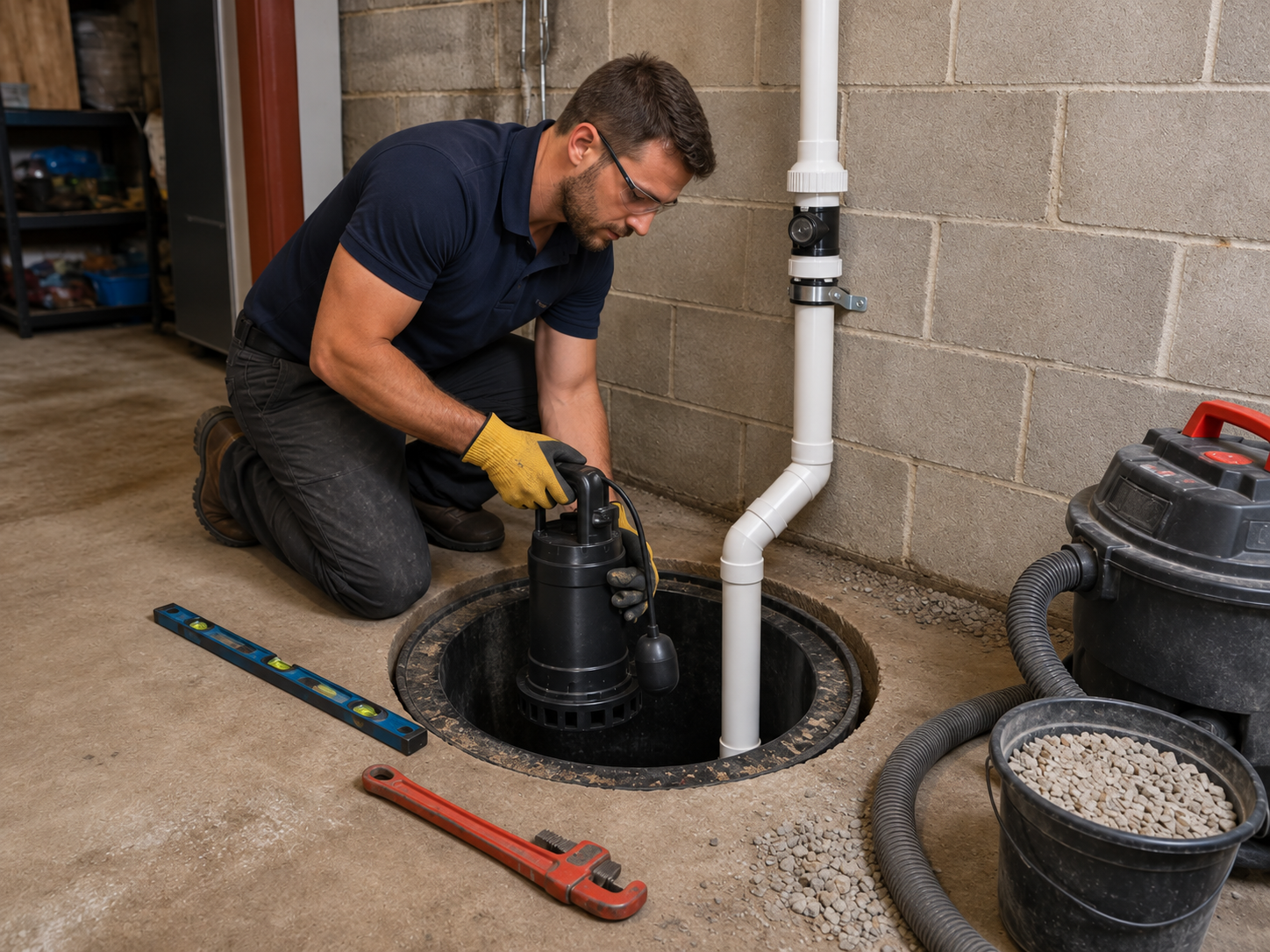
A sump pump is an important part of many residential basement drainage systems. It is typically installed in a specially constructed sump basin, also called a sump pit, where water collects before being pumped away from the foundation.
When groundwater enters the basin and reaches the pump's activation level, the system is designed to move that water through a discharge pipe to an appropriate drainage location. This helps manage water accumulation and can reduce the risk of basement flooding when the system is properly designed and maintained.
Professional sump pump installation involves evaluating the existing drainage arrangement, selecting an appropriate pump capacity, checking the sump basin, installing suitable discharge piping and testing the equipment. Every property has different drainage conditions, so the installation should be planned according to its specific requirements.
Sump pump problems are not always obvious until heavy rainfall or rising groundwater puts additional pressure on your basement drainage system. Recognizing early warning signs can help you address potential issues.
Different sump pump designs serve different basement drainage requirements. Choosing the right type depends on the sump basin, installation space, expected water volume and property conditions.
Submersible pumps operate inside the sump basin, with the motor designed to work underwater. They are commonly used in residential basement drainage systems where space and quiet operation are important.
Pedestal pumps have a motor positioned above the sump basin while the intake extends into the water. Their design provides access to the motor for inspection and maintenance.
Battery backup systems provide an additional pumping option during certain power interruptions. They can help support basement water management when the primary electric pump is unavailable.
A primary sump pump is the main unit responsible for removing water collected in the sump basin. Proper sizing and installation are important for reliable operation.
Combination systems use a primary pump alongside a backup unit. This arrangement provides an additional level of protection when the primary pump cannot operate.
Replacing an aging or damaged sump pump can help restore the operation of an existing drainage system. The replacement should match the basin and discharge requirements.
Installing a sump pump involves several important plumbing and drainage considerations. A properly planned installation helps ensure that the equipment fits the existing sump basin and can discharge water through an appropriate outlet.
The sump pit is checked for suitable dimensions, condition, water collection and pump positioning.
Pump selection considers the expected water volume, vertical pumping distance and discharge pipe requirements.
Proper discharge piping helps carry pumped water away from the foundation to an appropriate discharge location.
The float switch and available electrical connections are checked to support proper pump activation and operation. Electrical work must follow applicable safety requirements.
The installed equipment is checked to confirm activation, pumping operation and discharge flow.
Correct pump selection, plumbing connections and drainage planning all contribute to an effective basement water management system.
A properly installed sump pump helps remove accumulated water from the sump basin before it spreads across the basement.
A functioning sump pump supports basement drainage during periods of increased groundwater and rainfall.
The system helps move collected groundwater away from the sump pit and designated discharge point.
Correct sizing and installation help the pump operate according to its intended performance specifications.
A suitable backup pump or battery system can provide additional support during certain power or equipment interruptions.
Professional guidance helps homeowners understand inspection, testing and routine sump pump maintenance needs.
Sump pumps have a limited service life, and their condition can change with usage, maintenance and operating conditions. If your current pump is unreliable, replacing it may be more practical than continuing with repeated repairs.
A straightforward process to help you understand your sump pump installation requirements.
Tell us about your basement water concerns, existing sump pump and drainage system.
Review the sump basin, pump condition, plumbing connections and discharge setup.
Install the selected sump pump and make the required plumbing connections.
Check pump operation and explain basic inspection and maintenance requirements.
Choosing the right plumbing professional matters when you are protecting your basement from unwanted water. A sump pump system should be selected and installed with attention to your property's drainage requirements.
Find answers to common questions about sump pump installation, replacement, basement drainage and sump pump maintenance in Ashburn, VA.
A sump pump removes water collected in a sump basin or pit and sends it through a discharge pipe to an appropriate drainage location. It helps manage groundwater accumulation around a residential basement.
Sump pump installation costs depend on the type of pump, sump basin condition, discharge piping, electrical requirements and the amount of plumbing work needed. An assessment helps establish the project requirements and expected cost.
Installation time varies depending on whether an existing sump pit and discharge line can be used. A new installation requiring basin preparation, additional piping or other modifications may take longer than a straightforward replacement.
The appropriate pump size depends on the amount of water entering the sump basin, the vertical pumping distance and the discharge pipe layout. A plumbing assessment can help determine suitable pump capacity for your property.
A battery backup sump pump can provide additional pumping capability during certain power outages or primary pump failures. It is worth considering for basements where water accumulation is a significant concern.
A submersible sump pump operates inside the sump basin, while a pedestal pump has its motor mounted above the basin with an intake extending into the water. The right option depends on the available space, installation conditions and system needs.
Sump pumps should be inspected periodically and tested according to manufacturer recommendations. Homeowners should check for debris, unusual noises, float switch problems and discharge obstructions. Regular maintenance can help identify issues early.
Continuous operation may be caused by high groundwater levels, a stuck float switch, an undersized pump, excessive water entering the basin or discharge problems. The system should be inspected to identify the underlying cause.
Replacement may be appropriate when the pump frequently fails, develops significant mechanical problems, shows corrosion or no longer handles your property's drainage needs. The decision depends on the condition of the existing equipment.
No. A sump pump helps manage water collected in its basin, but it cannot prevent every type of basement flooding. Foundation leaks, plumbing failures, surface water and pump malfunctions may require additional drainage or waterproofing solutions.
Whether you need a new sump pump, replacement of an existing unit or help evaluating your basement drainage system, contact Ashburn Plumbing Repair to discuss your residential plumbing needs.
Contact Ashburn Plumbing Repair